Drudess Art Exhibition
|
|
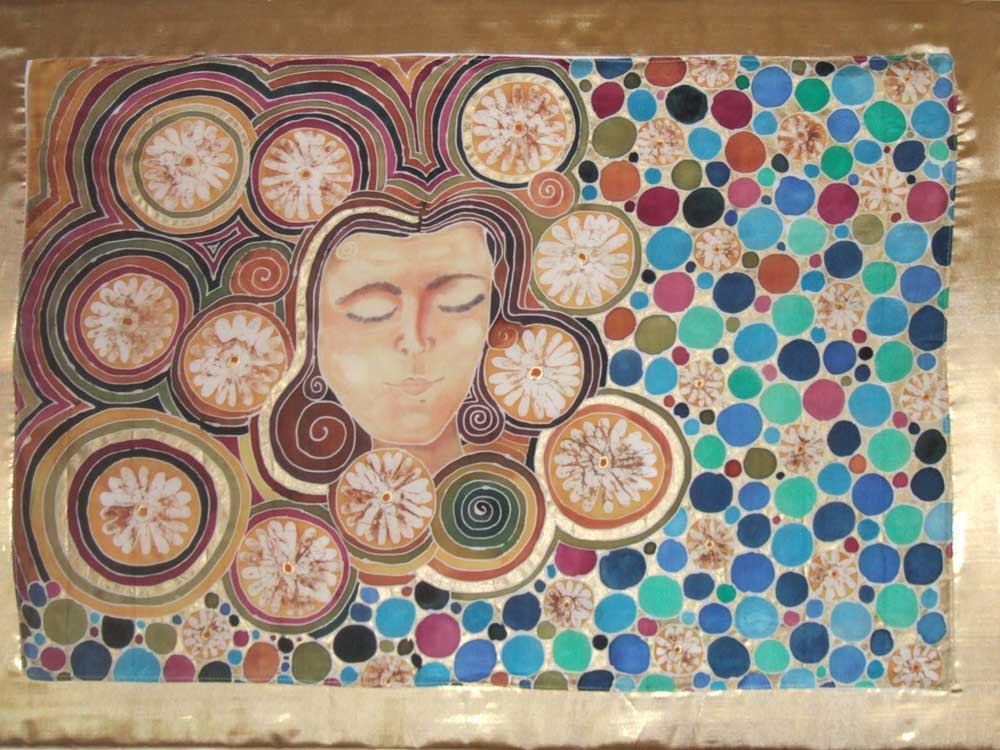
The batik process presents distinct stages which require planning during design stages. A design outline can be traced by drawing or brushing melted paraffin and beeswax with a tjanting onto the silk so it penetrates specific portions of the fabric. The
waxed silk is then painted with silk dyes, and I typically use bright
colours. The waxed areas repel or resist the dyes, therefore the term
‘resist process’ is often applied in reference to batik.
Special effects introduced to the vibrant silk dyes such as speckling with coarse sea salt, and surgical spirit and water to vary the colourwash help to suggest texture. Also, a characteristic crackling and veining of batik work is created by seeping a darker dye into the cracks made in an area of cooled wax. The
end results can be unpredictable at times, making batik so unique and
exciting! Finally, all the wax is removed by ironing the silk between
paper and steaming, which also fixes the dyes. The heat from the iron
melts the wax which is absorbed by the paper. |